From the Archive: Cultural Heritage Digitization Award, Part 2
In Part 1, I shared how HCLS identified a collection of historic scrapbooks created by our predecessors at what has become our current library system. These scrapbooks started in 1934 when Louise Crawford was selected to head up the Works Progress Administration (W. P. A.) library project in Hancock County. Staff continued to clip newspaper articles and paste photographs, meticulously labeling sources and dates, for decades. We wanted to digitize and share these with the community, and we identified the project as a good candidate for Mississippi Digital Library’s annual Cultural Heritage Digitization Award. We were honored to receive this award after an application and interview process, and began the work to get the scrapbooks ready, including a review of the materials to identify possible copyright holders and to create metadata—information to describe the digital objects and their contents for user access—so that these scrapbooks can be scanned by Mississippi Digital Library the first week of August, 2026.
When I met with representatives from Mississippi Digital Library in January and March, they made recommendations on supplies and methods for getting the items ready. Any metal paperclips and staples would need to be removed. Items could be held in place with a plastic paperclip or placed in a protective envelope and labeled to keep them in the original order. One volume had visible inactive mold spores, and they recommended a HEPA vacuum and isolation. Most of the volumes would be better with the binding removed to ensure no further damage to fragile pages and make scanning easier—in some cases the clippings went to the edge and releasing them would allow them to lay flat and to capture the full page. I gathered the recommended supplies—archival papers for interleaving, boxes to hold disbound volumes, mylar and paper envelopes for loose materials.
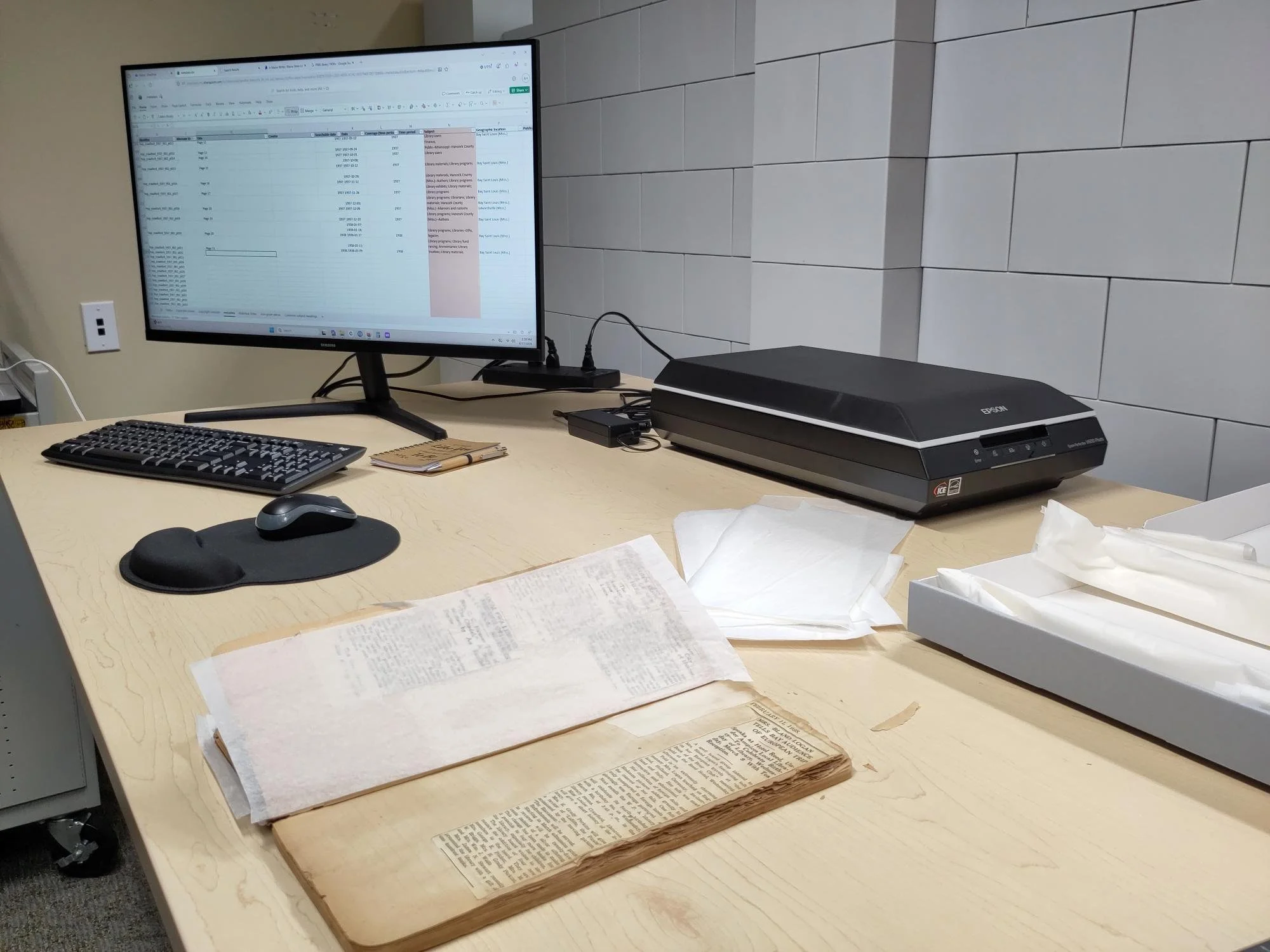
The archive space workstation provides ample room for the computer, where metadata is being written into a spreadsheet, and the scrapbook with the box it will be housed in.
During this time, we were also working on setting up an archiving space for digitization and access to materials. The overlap of getting a workspace, computer, and other equipment set up slowed the CHDA project. By late May work to process each scrapbook started slowly, then picked up as I got more familiar with the content and the process. The work to get the scrapbooks ready for the MDL digitization team in August finished up at the end of July.
Describing materials
Digitizing materials for public access includes an important step that will allow users to search, find, and understand items in an online platform—creating descriptive metadata. Each scrapbook is given a unique identifier, a title, and other information about its creation and content. Information like who created or contributed to the digital object, when it was created, what the object is, and what it’s about, are all written into a spreadsheet that can later be uploaded to the content management platform. MDL has a template and guidelines for metadata, similar to what HCLS already creates for our archive collections. Each piece of information is an element and the standard is called Dublin Core.
In addition to each individual scrapbook, I created additional page-level information so that each page of the scrapbook displays and is searchable by information present on the page. An important element for user access is “subject,” helping users find common information. Similar to how books are described in the library’s catalog, we use Library of Congress Subject Headings. When this collection is available to view online, you will be able to search full text and find categories of content across all the scrapbooks. For example, you might want to read about “Library buildings” and follow the library’s journey from its start in the Hancock Bank, to the Knights of Columbus Hall, to the purchase of a home at 123 Court Street.
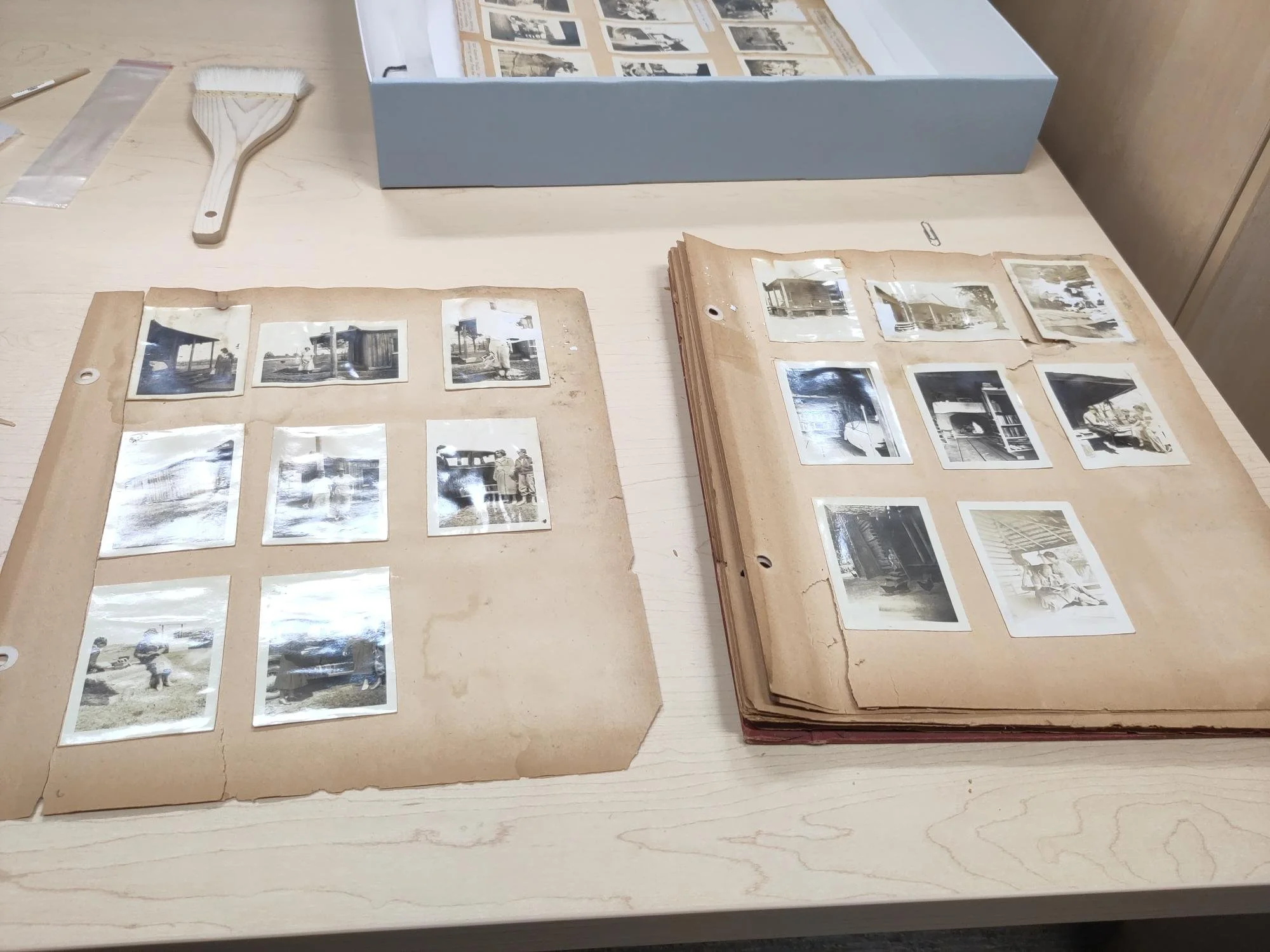
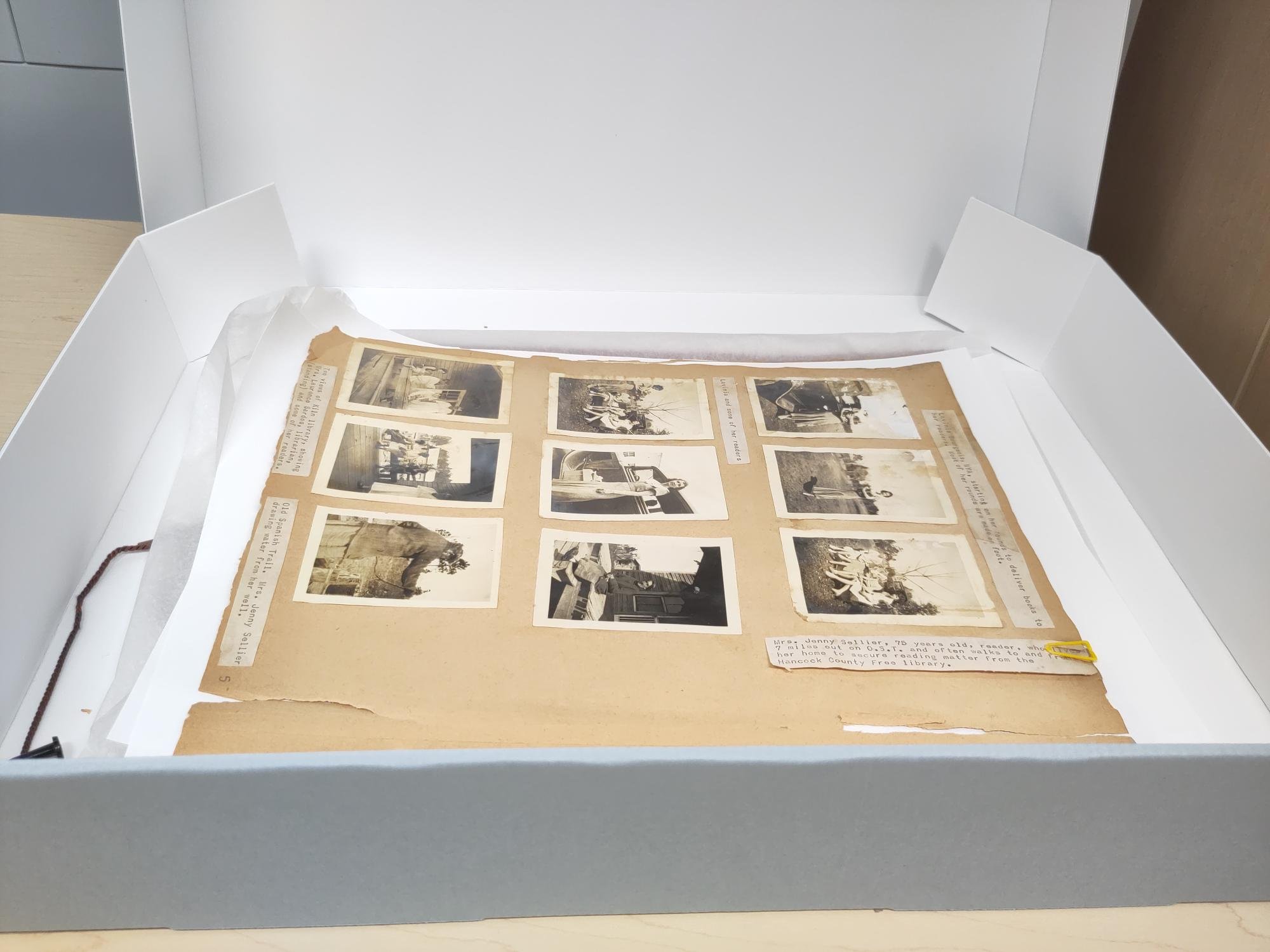
This scrapbook, pictured here next to the archival box that it will be stored in and tools like a soft brush, has had the binding removed for the digitization process. Preparation involves page by page preparation and description.
Mold remediation
One of the issues identified during the project review and planning was the presence of inactive mold. Visible spots of mold spores and stains were present in one scrapbook volume. I used tools, including a HEPA vacuum and soft brushes, along with a mask and nitrile gloves for personal protection, to gently loosen then remove from each page. This was a slow, but gratifying process. This scrapbook is contained in an archival box. The photographs below show the before and after for one area of a page, and the discoloration that remained after thoroughly brushing and gentle vacuuming.
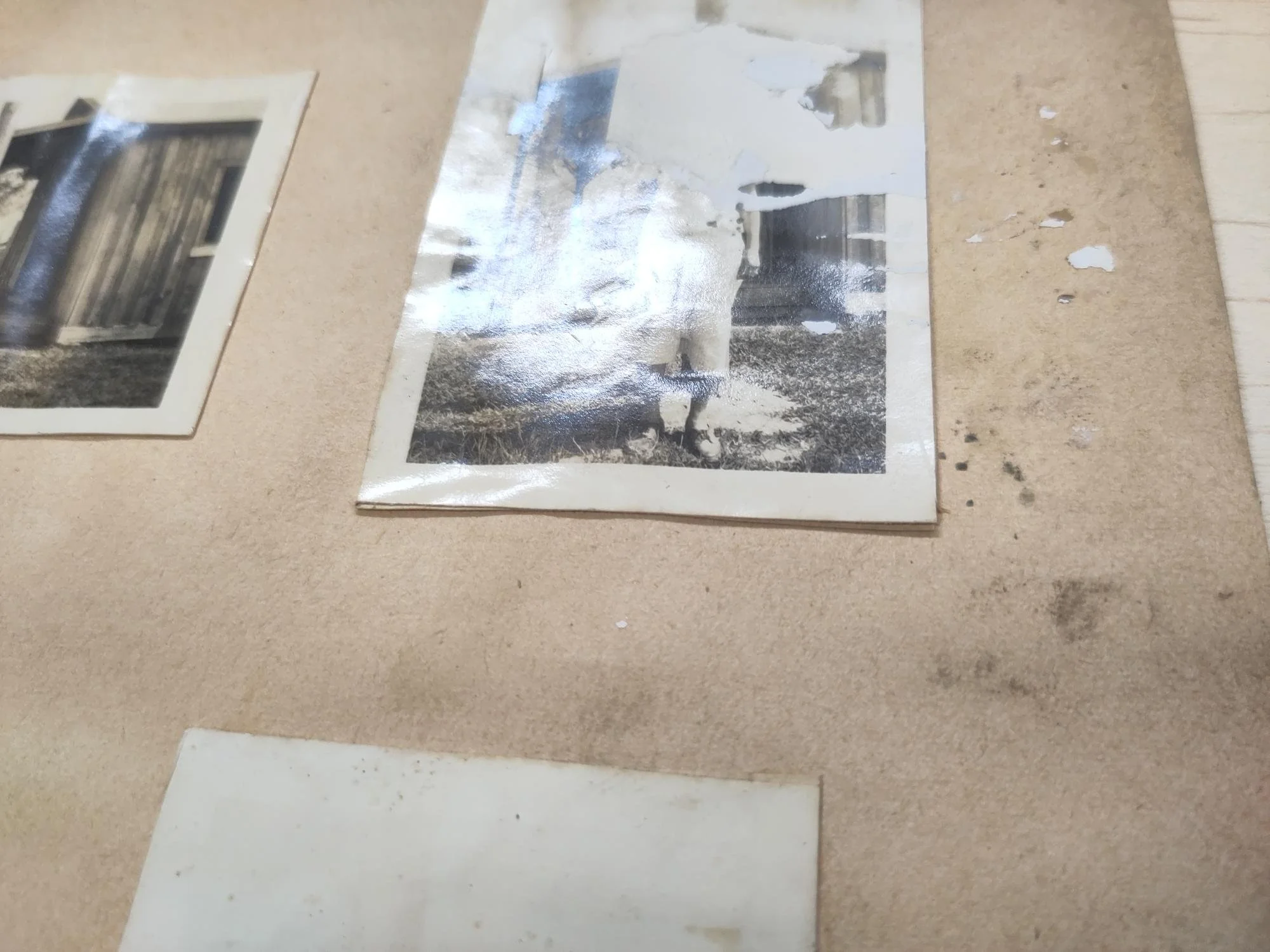
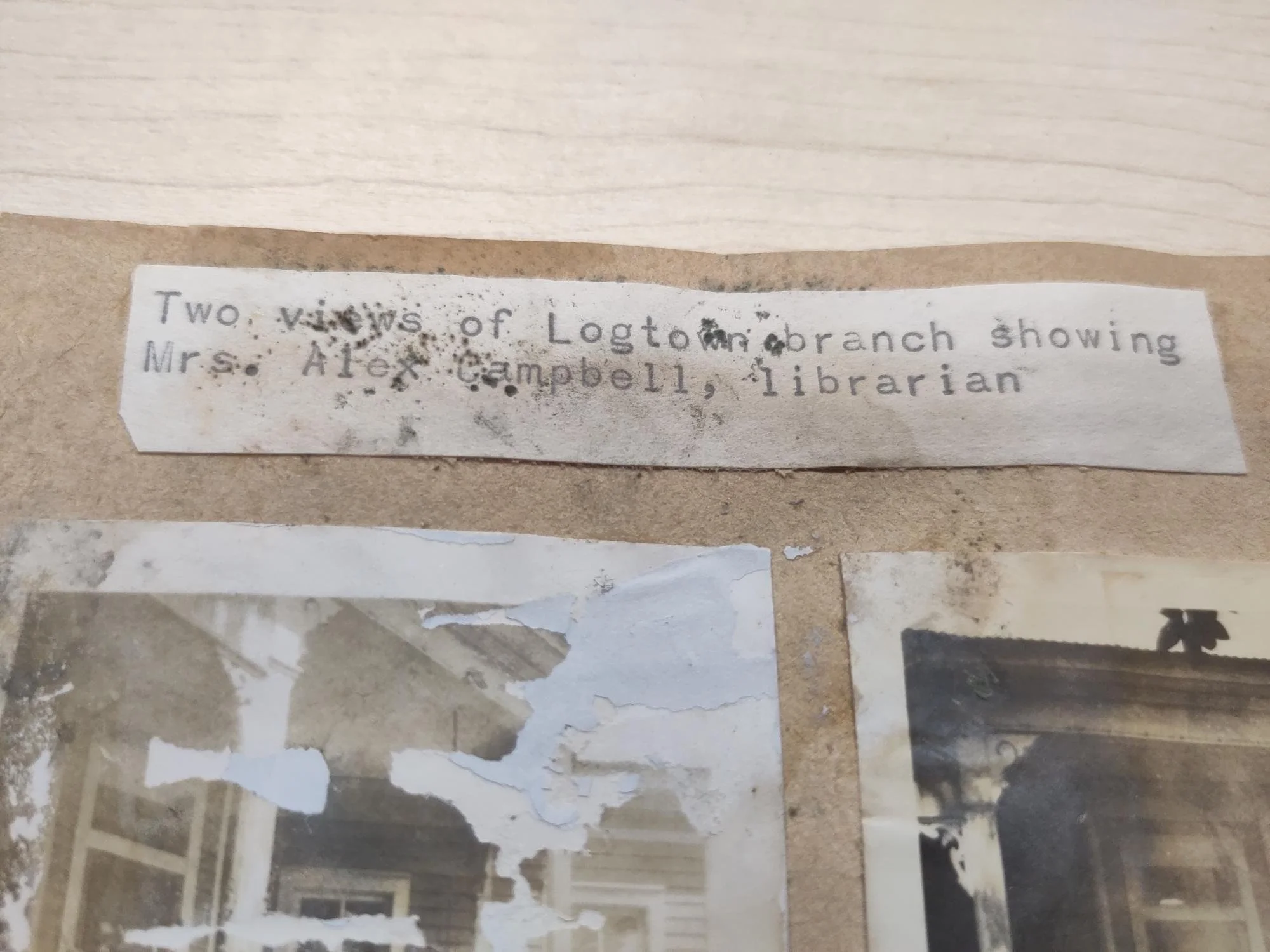
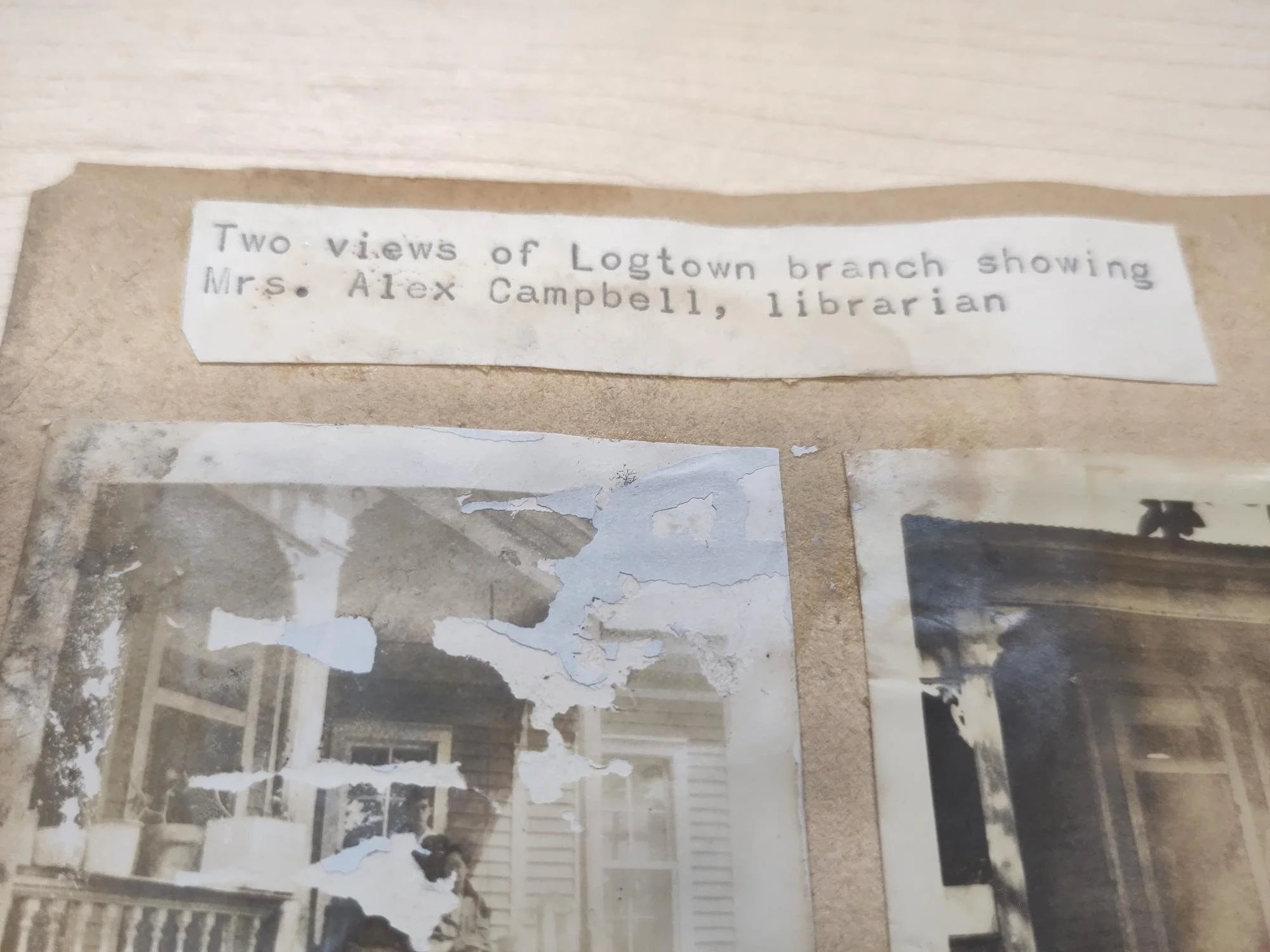
Inactive mold spores visible in one scrapbook required special treatment to remove the spores using a HEPA vacuum.
The digitization of the Louise Crawford scrapbook collection continues the first week of August, with Part 3 of this series. HCLS is grateful for the Mississippi Digital Library and the guidance they have provided throughout this process.