
Digital Archives
About the Hancock County Library Digital Archives
Our digital archives began with the digitization of microfilm and bound newspapers in our physical collection. With funding provided by The Library Foundation of Hancock County we were able to create a searchable digital collection of historic periodicals about Hancock County, Mississippi. Initial access to the Vault—a digital preservation and storage platform from the Internet Archive—was acquired with grant funding from the Community Webs program. As participating members of Community Webs, HCLS received 500GB of Vault storage from grant funding provided by the Mellon Foundation to preserve our digital collections.
HCLS is in the process of building our collections on the Internet Archive where we can expand access to researchers around the world and track the use of our digital collections.
HCLS welcomes born-digital and physical items from the community to preserve as part of our commitment to collecting the history of Hancock County for future generations.



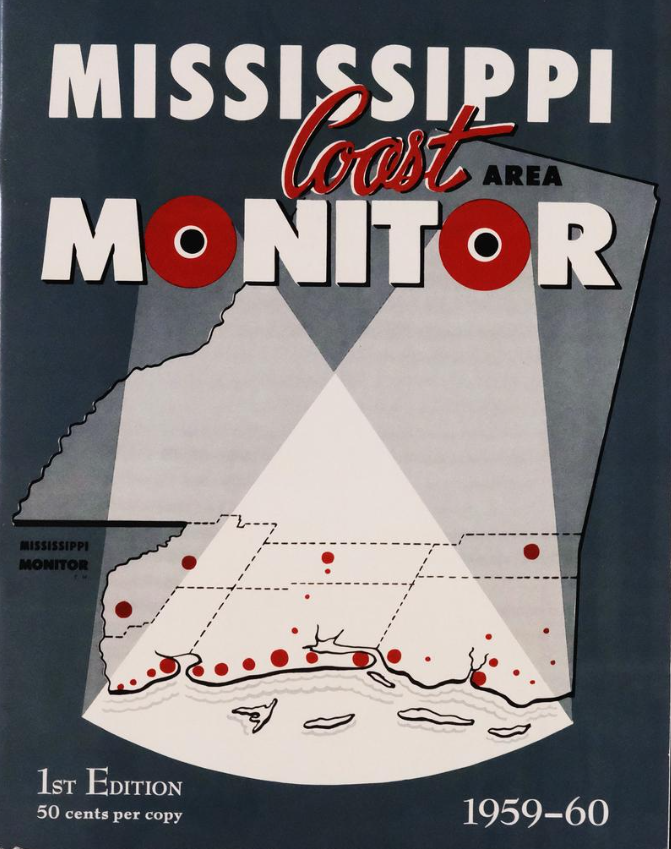



View all of our digital collections on the Internet Archive’s archive.org.
Physical Research Collections
Hancock County Library System has a collection of historic newspapers—including The Sea Coast Echo, Hancock County Eagle, and other local titles. Physical materials available for research are included in our catalog and accessible by reserving time.
Please review the policies (section 2.5 Historical Archive) before reserving time in our archive access space.
FAQs
-
We accept born-digital files, digitized items, and physical materials such as photographs, documents, audio, video, and other items that fit our collection development priorities and document the history of Hancock County and the surrounding area. Not every donation can be accepted, but we encourage people to contact us before sending materials.
-
Please do not send large groups of files or informal donations by email unless staff has asked you to do so. Email is not a reliable preservation workflow, and files sent this way often arrive in formats, sizes, or quality levels that are not ready for long-term use. If you have materials to offer, contact us first so we can determine the best way to review them.
-
We review donations for collection fit, copyright status, technical quality, file size, and preservation value. Some items may be valuable historically but still unsuitable for immediate digital preservation if they are blurry, cropped, incomplete, mislabeled, or in a format that is hard to preserve reliably. In some cases, we may accept materials for future processing; in others, we may recommend a different repository.
-
Digitization is a preservation process, not just a quick scan. Each item may need review, description, rights checking, scanning or imaging, quality control, file naming, metadata, and storage preparation, and we also have to manage a backlog of projects. We are a small staff and may rely on volunteers or partners, so timelines can vary.
-
Typically, yes. The Deed of Gift allows for photographs and documents to be digitized and returned to the donor, and some materials may instead be transferred to the library for digitization and/or display depending on the agreement and project needs. Final decisions depend on suitability, condition, rights, and staff capacity.
-
For born-digital and donated digital files, we prefer formats that are commonly used for preservation and access, including TIFF, PNG, JP2, PDF, WAV, FLAC, AVI, MPEG-4, MOV, and PDF/A, depending on material type. If you are unsure what you have, send a brief description first rather than a large attachment.
-
Poor-quality files can limit both preservation and access. If a file is blurry, cropped, underexposed, upside down, or missing pages, it may be unusable for research even if it still “looks okay” on a phone or computer screen. Good capture quality helps us preserve details, search accurately, and create a trustworthy public record.
-
Sometimes we can correct basic issues such as orientation, cropping, duplicate pages, and descriptive metadata. More intensive fixes, like rescanning to address blur, missing pages, or low visibility, may take longer and are not always possible. When possible, we may ask you for a better source file instead of trying to repair a low-quality image.
-
Yes. We prefer donations be accompanied by a Deed of Gift, which documents ownership, rights, permissions, and how the library may preserve, use, and provide access to the materials. The form also allows us to clarify copyright status and any special arrangements before materials are accepted.
-
That can still be possible in some cases, but copyright matters must be reviewed carefully. The Deed of Gift has options for materials you own outright, materials with mixed copyright ownership, and materials you possess but do not own the copyright to. Please contact staff before sending items if the rights situation is unclear.
How To Donate:
HCLS accepts born-digital, digitized, and other materials as part of our collection development policy, including photographs, texts, audio, video, and objects. Materials should represent the people, places, and events of Hancock County and the surrounding area and fit within one of our existing or planned collections. Not all materials will be accepted, but we encourage anyone interested to contact us.
Donors of materials may complete the Deed of Gift form. You can also participate in a community scanning event to have your items digitized. Check back here or on our event calendar for upcoming digitization dates.
What to expect after you contact us:
After you contact us, we will review the materials and determine the best way to proceed. We can often meet in person to review a donation and complete the Deed of Gift, or you may drop off materials with the signed form. Digital files may be delivered on physical media or through a secure Google Drive link. We will assess the materials for collection fit, preservation needs, and processing time, and some donations may need to wait several weeks or months before review begins. Physical media can usually be copied and returned if requested.
We recommend that donors keep copies of any irreplaceable originals, if possible.
File quality, labeling, and format may affect how quickly materials can be reviewed and processed.
We may ask follow-up questions about ownership or copyright before accepting materials.
Large or complex donations may require a staged review or later pickup/drop-off.
Donation Forms
CALL FOR YEARBOOKS!
HCLS is currently digitizing Hancock High School (Hancock North Central, prior to 1991) and Bay High School yearbooks! We have most years for Hancock High between 1977 and 2024. If you have copies in good condition prior to 1977 or one of our missing years, please contact us to have your copy digitized for this collection.
Yearbooks for other schools in Hancock County:
HCLS is interested in adding yearbooks other schools. Contact us for more information.
Missing years include:
| Hancock High | Bay High | St. Stanislaus/OLA | St. Rose | |
|---|---|---|---|---|
| 2020s | 2021-current | Pending agreement with school | n/a | |
| 2010s | 2013, 2019 | n/a | ||
| 2000s | 2000, 2003, 2004 | n/a | ||
| 1990s | 1990, 1995 | 1990, 1991, 1994-1997, 1999 | n/a | |
| 1980s | 1980, 1981, 1983-1985 | 1982, 1985, 1986, 1988 | n/a | |
| 1970s | 1970-1976, 1978-1979 | 1970 | n/a | |
| 1960s | All | 1960-1962, 1965, 1966, 1969 | All | All |
| 1950s | All | All | All | All |
| 1940s | n/a | 1941-1945, 1947-1949 | All | All |
| Earlier | n/a | n/a | All | All |

Seeking Volunteers & Partners
HCLS is seeking volunteers, student interns, and project partners for our community archiving initatives.
Opportunities for contributing to community archive projects include:
Assisting the public and library staff in digitizing materials (training will be provided)
Assisting library staff with community archive programs and events
Creating descriptive metadata for digitized items and collections
Donating materials for HCLS digital collections; manuscripts, volumes, and other materials can be digitized and returned to the donating individual/organization
Partnering with HCLS for oral history projects, with the intention of donating interviews and supporting materials to HCLS to preserve and provide public access

UPCOMING PROGRAMS
Help Improve Our Collections
HCLS welcomes feedback on the quality of the images and metadata describing our collections. Help us identify and make corrections for future users by completing this online form for each item or collection with identified issues. Examples of issues we can correct include pages out of order or incorrectly oriented (upside down), duplicate pages, and cropping issues. We can also add or adjust descriptive metadata to help researchers find items or collections. Issues that may take longer depending on available resources include rescanning an item or part of an item to correct poor visibility, missing pages, and blurring.

Other Resources for Mississippi History

Mississippi Digital Library

Mississippi Department of Archives & History

Mississippi State University, University Libraries


Digitized Newspapers from Library of Congress, Chronicling America
Oral History Kits
Grant funding from Community Webs has been used to further our Strategic Plan goals of collecting Hancock County history through the acquisition of resources to support community archiving initiatives, including oral history kits, digital preservation resources, and programming and outreach.
Community members interested in donating recordings of oral history interviews may submit electronic files with a completed Oral History Agreement.


